
Home / Research
Research-informed school bus training
An estimated 26 million school-aged students ride the bus daily. Transportation extends the school day and shapes student behavior and readiness to learn.
Introduction
Transportation extends the school day
School transportation teams are responsible for student safety and behavior, yet specialized training in strategies that promote positive behavior and self-regulation is often overlooked.
Research shows that access to school bus transportation can improve attendance. Students from economically disadvantaged households gained approximately one additional day of attendance annually and experienced a 20-25% reduction in chronic absenteeism (Edwards, 2024).
However, student safety remains a concern. Among students who reported being bullied, nearly 1 in 10 experienced bullying on the school bus (NCES, 2024). These findings highlight the importance of creating a safe, positive, and meaningful learning environment that encourages ridership and supports student success.
The problem
Reactive strategies leave teams ill-equipped
Bullying, aggression, and elopement compromise safety on buses, with nearly 1 in 10 students who reported being bullied experiencing bullying on the school bus (NCES, 2024). Preschoolers are especially vulnerable because their self-regulation skills are still developing.
- Ten to 30% of preschool students exhibit challenging behaviors.
- Students younger than 5 are expelled from school 3 times more than K-12 grade students.
- Students with disabilities may require individualized or adult prompting to strengthen self-regulation and maintain safe behavior on the school bus.
Written referrals, pulling over the bus, and watching video footage are still widely used to manage student behavior; all of which are reactive strategies. Without training, transportation teams may not recognize early signs of dysregulated behavior.
The evidence
Adult modeling and consistent routines strengthen self-regulation
Students with strong self-regulation exhibit improved emotional control, direction-following, and academic growth.
Source: Strengthening Student Safety and Self-Regulation Through Evidence-Based School Bus Training, Dr. Lisa Navarra.
Results reflect documented research findings. Individual district outcomes may vary.
Research-informed training. Measurable results.
Reduced unsafe and distractible student behaviors
Sample behavior reductions
Results reflect documented research findings. Individual district outcomes may vary.
- Train the Team. Interactive, research-informed professional development equips transportation professionals, educators, and families with practical strategies to support student safety and positive behavior.
- Promote Positive Behavior. Practical strategies that encourage safe, respectful, and supportive student interactions.
- Celebrate Student Success. Recognizing positive behaviors and strengthening connections between transportation, school, and home.
Training topics for transportation teams
LAUNCH!® offers trainings that equip transportation professionals with practical strategies to promote student safety, positive behavior, and supportive school bus environments.
- Positive Behavior Support
- Adult and Peer Modeling
- Supporting Diverse Student Needs
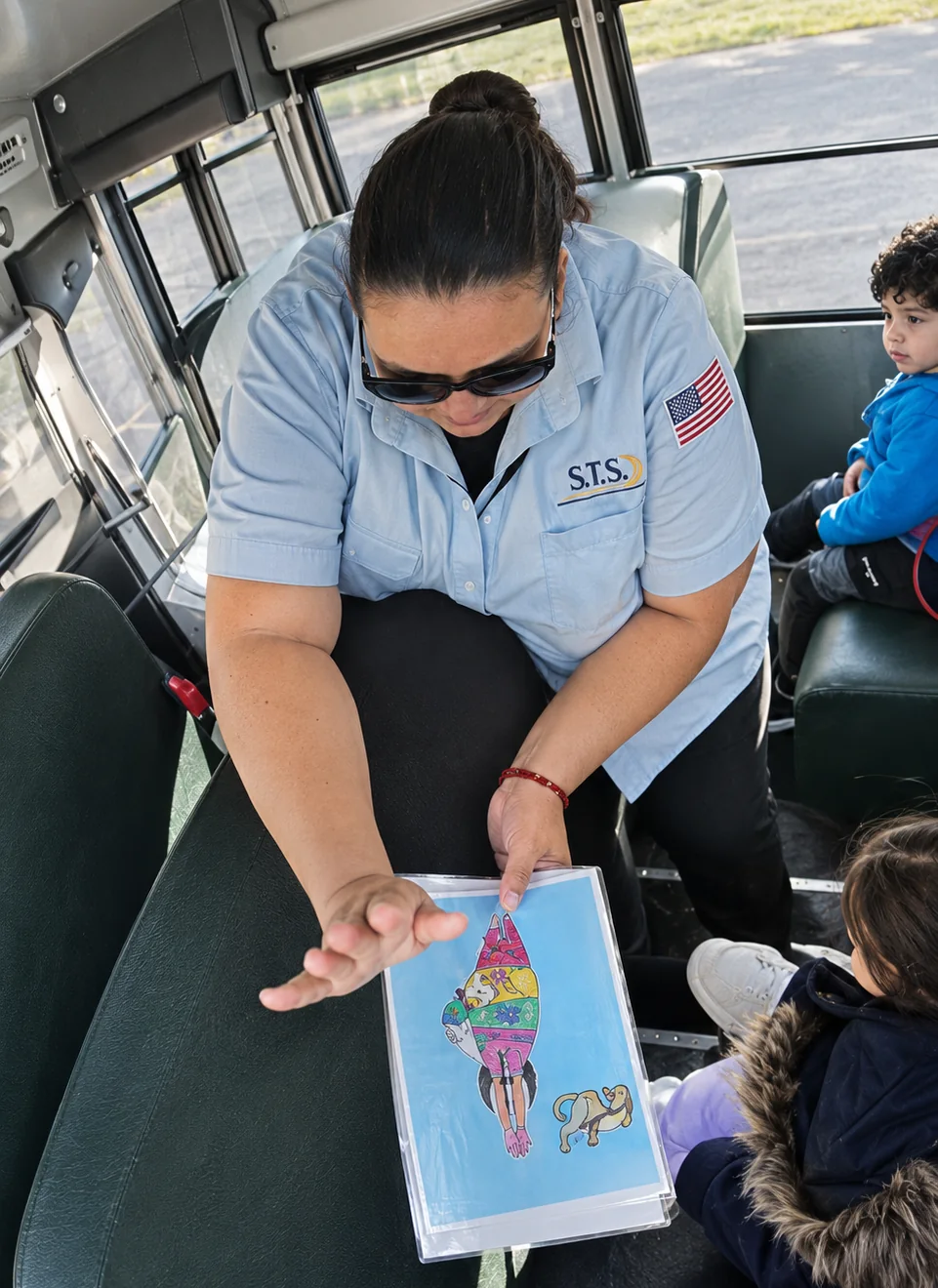
Training drivers and attendants as behavioral models and safety leaders can provide measurable benefits in safety, attendance, and self-regulation.
Dr. Lisa Navarra | Where Experience Meets Research
The solution
Intervention-based driver and bus attendant training
Intervention-based driver and bus attendant training equips drivers and their teams to use evidence-based, developmentally appropriate practices with students with and without disabilities, and to reinforce predictable and structured routines on the school bus.
Visual supports and practical behavioral strategies modeled by transportation professionals help students monitor their behavior while providing predictability and a meaningful learning environment during transitions. Launch!® provides systematic training for transportation providers, educators, and families, creating consistent expectations across transportation, school, and home settings.
From research to practice
Teaching safe behavior on the school bus
The Launch!® School Bus Safety Program trains transportation teams to use evidence-based, developmentally appropriate practices with students with and without disabilities. Adults learn to model safe behavior, establish predictable routines, and reinforce positive student behaviors in ways that match their age, abilities, and support needs.
Launch!® principles
Four principles behind the training
- Proactive prevention: Establishing predictable routines and clear behavioral expectations.
- Positive reinforcement: Recognizing and encouraging safe and school‑ready behaviors.
- Self-regulation: Supporting students in developing strategies to manage their emotions and behavior.
- Consistent communication: Connecting transportation professionals, educators, and families through shared language and expectations.
By strengthening the connection between education and transportation, Launch!® promotes a coordinated approach to supporting students throughout their school day.
Selected references
- Bandura, A. (1991). Social cognitive theory of self-regulation. Organizational Behavior and Human Decision Processes, 50(2), 248-287.
- Brown, J. R., Karikari, I., Abraham, S., & Akakpo, T. (2021). Left off the route: A qualitative examination of urban bus drivers wanting to be players in the bully prevention solution. Journal of Interpersonal Violence, 36(7-8), NP4271-NP4295.
- Hendrix, J. A., & Kennedy, E. K. (2020). Supporting students on school buses: Results from a nationally representative sample of head transportation officials. Preventing School Failure: Alternative Education for Children and Youth, 65(1), 79-88.
- King, S., Kennedy, K., & Powelson, A. (2019). Behavior management interventions for school buses: A systematic review. Education and Treatment of Children, 42(1), 101-128.
- National Center for Pyramid Model Innovations. (n.d.). Pyramid Model overview. https://www.challengingbehavior.org/pyramid-model/overview/
- U.S. Department of Education & U.S. Department of Transportation. (2024, September 3). Fact sheet: Bolstering daily school attendance through safe, accessible, reliable transportation. Read the fact sheet
School bus safety training
Bring Launch!® to your transportation team
Launch!® teaches transportation teams to use evidence-based, developmentally appropriate practices to support safe behavior on the school bus.
Dr. Lisa Navarra, M.S., SDA
Founder, Child Behavior Consulting